The ‘Needs to Know’
Distance: 3.5 miles (10.5km)
Time to walk: Roughly 1.5 hours but you could spend longer exploring the shops & church when open)
Difficulty: Fairly flat on a mixture of surfaces. There are no stiles, but some steps
Parking: Wood Street car park. Postcode CV47 1PH what3words blurred.defaults.cubes
Public toilets: Cafes etc in the town
Map of the route:

Southam sits about 6.5 miles southeast of Leamington Spa & the name means ‘southern homestead or land situated in a river bend’
It was a Royal Manor until AD 998, when Ethelred the Unready granted it to Earl Leofwine. When Coventry Priory was founded in 1043, Leofwine’s son Leofric, Earl of Mercia granted Southam to it
The Domesday Book records the manor as “Sucham”. The Priory, which in the 12th century became the first Coventry Cathedral, kept Southam until the 16th century when it surrendered all its estates to the Crown in the Dissolution of the Monasteries. In 1227, the monks of Coventry Priory were granted a market charter for their Manor at Southam, causing it to develop into a market town. Southam later received charters to hold three yearly fairs: Medieval fairs were special markets, held only a few times a year, which attracted buyers & sellers from longer distances than the normal weekly market
William Shakespeare mentions Southam in Henry VI, part 3, Act V, Scene I, Lines 10–16:
WARWICK
Say, Somerville, what says my loving son?
And, by thy guess, how nigh is Clarence now?
SOMERSET
At Southam I did leave him with his forces,
And do expect him here some two hours hence.
WARWICK
Then Clarence is at hand, I hear his drum.
SOMERSET
It is not his, my lord; here Southam lies:
The drum your honour hears marcheth from Warwick.
Charles I passed through Southam just before the outbreak of the Civil War & apparently was not made welcome by the townsfolk, who refused to ring the parish church bells. On 23 August 1642, the day after the King formally declared war on Parliament, a skirmish was fought outside the town between Parliamentary forces led by Lord Brooke & Royalist forces commanded by the Earl of Northampton. The Battle of Southam is claimed by locals to have been the first battle of the English Civil Wars. Later that year, Charles stayed at the Manor House in Southam before the Battle of Edgehill on 23 October 1642. In 1645 Oliver Cromwell & 7,000 Parliamentary troops stayed in the town
In the stagecoach era Southam became an important stop on the coach road between Coventry & Oxford. Many old coaching inns remain in the town. However, few buildings in Southam date from before 1741, when a large fire devastated the town
We’ll look at more of the history & facts as we go so…
Let’s Walk!
1. Park in the car park in Wood Street &, from the entrance, look across to see the Congregational Church which was built in 1839…

Pass this & walk towards the town centre

2. At the corner turn left along the Main Street & walk to the corner with Daventry Street…

On the corner’s the half-timbered building which was formerly the manor house…

Charles I stayed here in 1641 &, like mentioned before, the townsfolk refused to ring the bells. For this they were fined thirteen shillings & four pence. The bells remained silent again on His Majesty’s departure, & the churchwardens were again fined. It was from this same building in 1642, before the battle of Edgehill, that Charles issued a proclamation to his troops
3. Turn left at the Manor into Daventry Street & then bear right right into Bull Street. Ahead of you is The Bull…

The Bull dates back to the early 1800s & you can tell, from the arch, it used to be another coaching inn
Continue along Bull Street where, the town’s abbatoir once operated until the 1960s

4. At the end turn right into what surely has to be one of the best named streets ever…’Chickabiddy Lane’…

…to arrive back on, the now wider, Main Street where the market cross once stood. The large building to your left used to be The Craven Arms

This used to be the main coaching inn in the town &, in 1830, had stabling for 80 horses. You could regularly catch a stagecoach from here to London, Birmingham, Liverpool, Leicester & Oxford
5. Cross back over Main Street, turn right & then left into Park Lane…

After a few yards is the wonderful Lychgate of St James Church

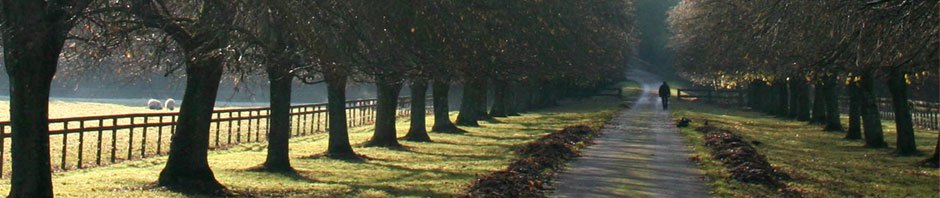
The Lychgate was built in 1938 & the avenue of red twigged limes trees planted leading from it down to the north porch of the church. The present trees were planted in 2002 replacing the original ones that were planted to celebrate the victory of Waterloo in 1815. The new trees were given in memory of Louisa Smith, a teenager who died in a car accident near Marton in 1999
6. Walk through the Lychgate & past the Church…

The present church dedicated to St James the Apostle was built in the 14th century. It’s constructed of Lias limestone & red sand-stone & consists of a nave, chancel, aisles & north & south porches, & a west tower with spire. Above the south door are the arms of King Charles I
7. Walk around the church & down the steps…

…& turn right past the Black Dog along Warwick Street

8. Continue along Warwick Street crossing the River Stowe…

…& then up the hill stopping outside Warwick House, which was once the Stoneythorpe Hotel

9. Close by is the Lilley Smith Memorial…
Henry Lilley Smith was born in Southam in 1787 or 1788. He became assistant surgeon to the 45th Regiment & obtained a diploma of MRCS in 1810 & then practised at Southam, where he was appointed parish surgeon. In April 1818, he opened a small hospital for the treatment of eye & ear diseases
It was built on land adjoining his house & contained about fourteen beds & was supported by voluntary subscriptions & donations. Smith periodically visited Warwick, Rugby, Banbury, & Northampton to select suitable cases. About 100 in-patients & 250 out-patients were treated annually

In 1823, fired by his ambition to improve medical care for the poor, he established a self-supporting dispensary in Southam under the presidency of Sir Grey Skipwith, MP for South Warwickshire, & his committee. The premises consisted of a two-storied thatched cottage, sited close to the Infirmary. Membership was for Southam residents who could not afford to pay doctor’s fees. Patients had to be recommended by employers, clergymen of their parish or by two respectable inhabitants. The annual subscription was 3 shillings & 6d for adults & 2s for children. The dispensary was self-supporting but during the cholera epidemic of 1832 each family had to pay an additional 6d a week
The Southam Dispensary was the first of its kind & its success resulted in the establishment of others in Atherstone, Chilvers Coton, Burton-on-Trent, Rugby, Coventry & Northampton. Smith was one of the original members of The British Medical Association & was an adviser to those wishing to follow his example
He also initiated a ‘Maypole Holiday’ in 1825 which is still held as the ‘May Fair’ in Southam today & provided allotments for local boys aged between 8 & 14. Each boy was required to grow some flowers, herbs & at least 6 kinds of vegetable. A small rent was charged & a small library for them was provided
Smith died in 1859 in Southam, where here, where you are standing, is the memorial to his life, work close to the site of his dispensary, which was demolished in 1868
10. After the monument turn right along Wattons Lane passing a more modern surgery…

…& follow it as the road runs out leading to a footbridge across the River Stowe

Wattons Lane was originally a coach road into the town & the footbridge replaced the original ford
11. To your right’s the Recreation Ground but, for now turn left & follow the path along the river…

Pass through the gate into the meadow…

12. Follow the small path (which may be muddy in places) across the right side of the field to the gate in the corner…

Be careful as this short stretch of the path could be very muddy in wet conditions. Ahead now is what we’ve come to see…Southam’s Holy Well…

13. The well is a Scheduled Ancient Monument & Grade 2 Listed Building that’s reputed to have been used by monks in this area. In 1761 the Holy Well was specifically excluded from the Enclosure Act with the proviso that it should be fenced with oak posts & rails & free access to the Well was to be provided for all Southam inhabitants
The current stonework was probably built late 18th / early 19th century, with further repairs around 1926. Following improvements in the water supply in 2004, restoration was carried out in 2005/6 supported by the Heritage Lottery Fund

This water is exceptionally cold & comes from below the quarry area on the Coventry Road. The water is reputed to be very efficacious for many eye ailments. Note the gargoyles spout heads…
14. Retrace your steps back along the top path past the sewerage works to the Recreation ground…

Now initially follow the stream for a hundred yards or so…

…& then bear diagonally left up to the gate into the churchyard

15. Walk ahead & exit the churchyard through the Lychgate once more & cross into the Library grounds

Walk to the right of the Library & exit onto the High Street once more…

16. Continue up the hill & look across to see the Old Mint pub…

Southam minted its own coins in mediaeval times because local people found ordinary coins too high in value for everyday use. The old mint house was built in the early 16th century (on the site of a 14th-century hospice). Have a look at the grooves in the stone doorway which are said to be the result of soldiers sharpening their swords
During the Civil War, King Charles used the Southam mint to melt down silver to make coins to pay his soldiers. He stayed at the old manor house nearby (known subsequently as King Charles House). He made an address to his troops at Southam on 21st October 1642 before the battle of Edge Hill
17. Next door’s No. 50 which dates back to 1640 but has seen may renovations…

Continue up the road which now widens considerately

18. Here on the right’s the Bowling Green pub. The origins of the Bowling Green date back to 1520 with the current pub being rebuilt in 1750 after a fire destroyed the original building
In the early 19th century, both Joseph Arch & Joseph Ashby, leading figures in the
Agricultural Workers movement, addressed local people, on one occasion with an audience of as many as three hundred

It was from the Bowling Green that Southam’s annual Godiva Carnival started off, a tradition that died out in the 1880’s
19. Continue up the hill crossing Welsh Road West…

…which follows the route used by Welsh sheep & cattle drovers taking their animals to London for sale
20. Slightly further up on the left’s a turning into Grange Hall…

Once a private house but now a Grade I listed building used as the local Council office, it acted as a convalescent home for World War I soldiers. The gardens contain an amphitheatre area called the Peace Garden which was dedicated in 1995 to celebrate 50 years of peace since the end of World War II
21. Come back out of the drive & continue up the road, crossing over & turning right down Toll Gate Road…

Continue for about 200 yards to the bollards

22. Turn left down the fenced alleyway…

…& at the end turn left into the relatively new Merestone Park…

23. Follow the path up the hill. In 1999 the Town Council decided to erect a new Merestone to mark the year 2000. The original stone had been lost many years ago because of excavation at the cement works quarry. Because Southam’s local stone, Blue Lias, would have worn too easily a Caledonian Igneous stone, which had been laid down about 360 million years ago, was chosen. The stone weighed 4.5 tons & was brought to Southam

24. Walk back down the hill & carry straight on down the alley…

At the end follow the road all the way around until it meets the junction with Daventry Road

25. Turn right into Wood Street once more past St Marys RC Primary School…

Continue & turn right into the car park where this walk began
So that’s it…just outside the County & such an amazing town with a great history. Even if you simply go to visit the Holy Well it’s so worth that short trip
Go Walk!